

Financial Flows to Food Systems
Country Window
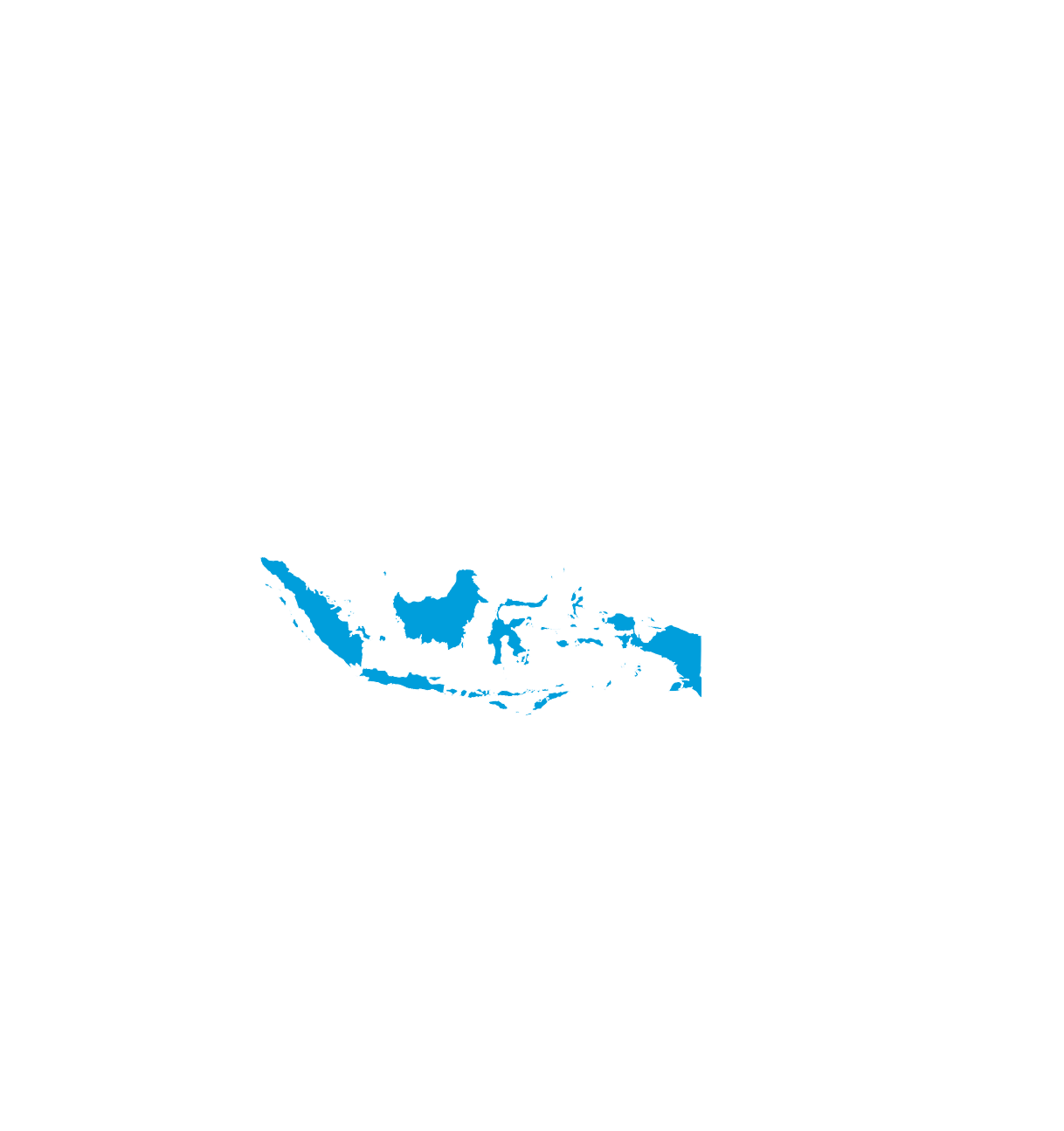
from 2019 to 2024

Government spending on food systems increased by 32%

48.7% of government spending was allocated to Social Assistance (Including emergency food Assistance)

96.4% of total food systems spending came from Domestic Public Financing
from 2018 to 2023

Indonesian’s external development financing to food systems is composed of 52.3% of OOF (Other Official Flows ) , 44.1% of ODA ( Official Development Assistance), and 3.6% of Philanthropic contributions.

OOF ( Other Official Flows ) to food system increased by 129%.

53% of OOF ( Other Official Flows ) for food system was allocated to Infrastructure for food system.
The 3FS data source to measure domestic public financing to food systems is the country national budget reported by central governments annually.
To determine which funds to consider in the national budget, the 3FS aligns with the IMF’s definition of the public sector and levels of government.
The 3FS primarily measures expenditures for food systems from the general/central government, depending on the availability of data. It also considers expenditures from state and local governments (not all countries will have all three levels) and public corporations (non-financial) as reflected in the national budget.
For international developing financial flows, the 3FS methodology leverages the OECD Creditor Reporting System database, which distinguishes between three types of financing:
Government aid aimed at fostering economic development and improving the welfare of developing countries on the DAC list of ODA recipient countries. ODA is provided by official agencies, including state and local governments or their executive agencies. Each ODA transaction is concessional, including grants or loans with favorable terms to support development efforts.
Official sector transactions that do not meet ODA criteria. These encompass grants to developing countries for representational or commercial purposes, official bilateral transactions intended to promote development but having a grant element of less than 25%, and any official bilateral transactions primarily facilitating exports.
Includes aid from private philanthropic foundations engaged in development work.
Read more about the Methodology →
